Cradlecrown v2.0: Every people in its own manner
All 65 civilizations now have their own soldiers, their own architecture, their own walls and their real masterpiece. Signature units have abilities of their own; reforms got historical names and seals, the heritage window was rebuilt, and armies walk free.
v1.9 was about making the game feel alive. v2.0 asks something else: there are 65 civilizations, but they all played with the same soldiers and the same houses. You could only tell Sumer from Venice by colour. In this version every civilization gets a look of its own.
Soldiers
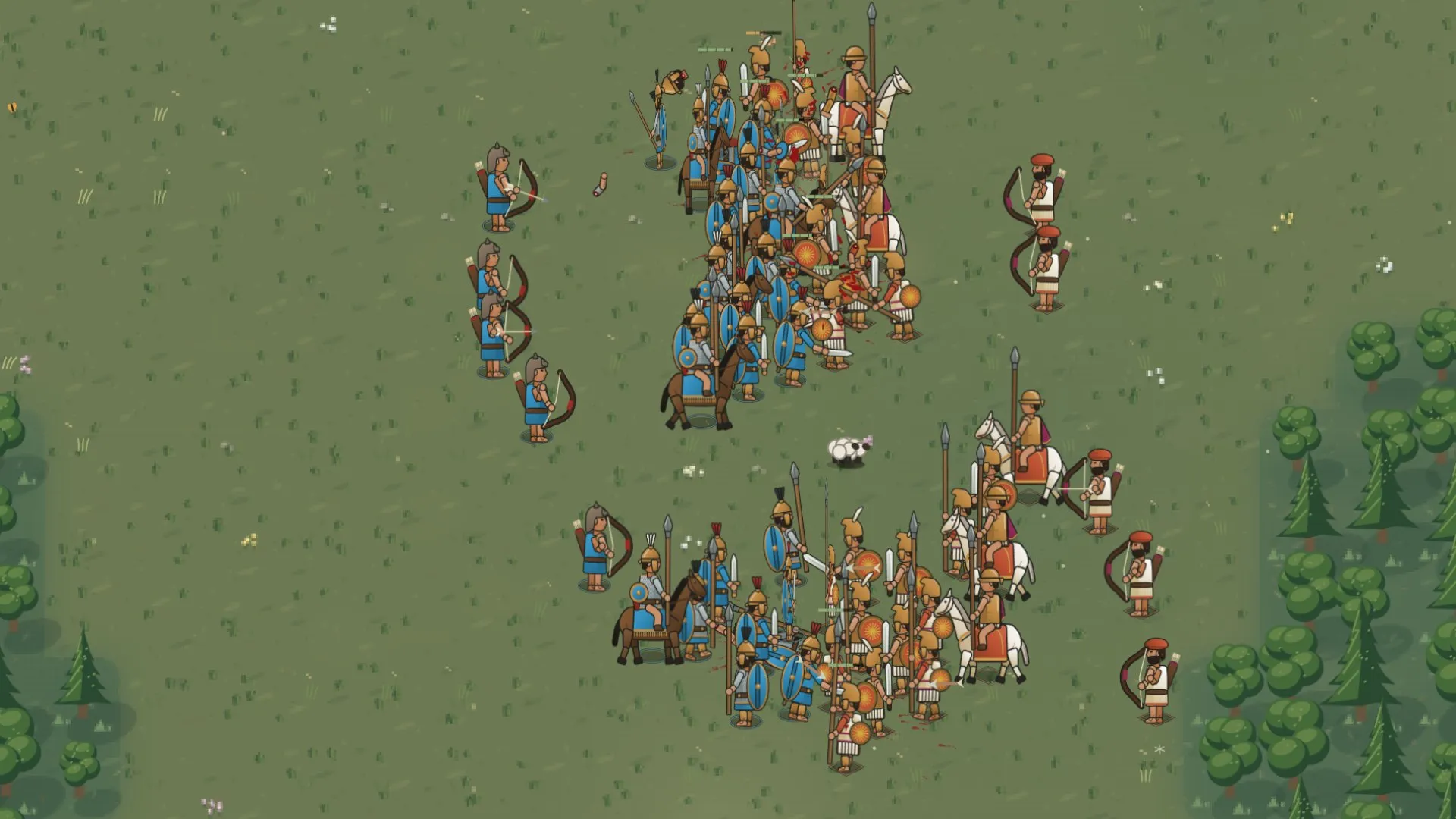
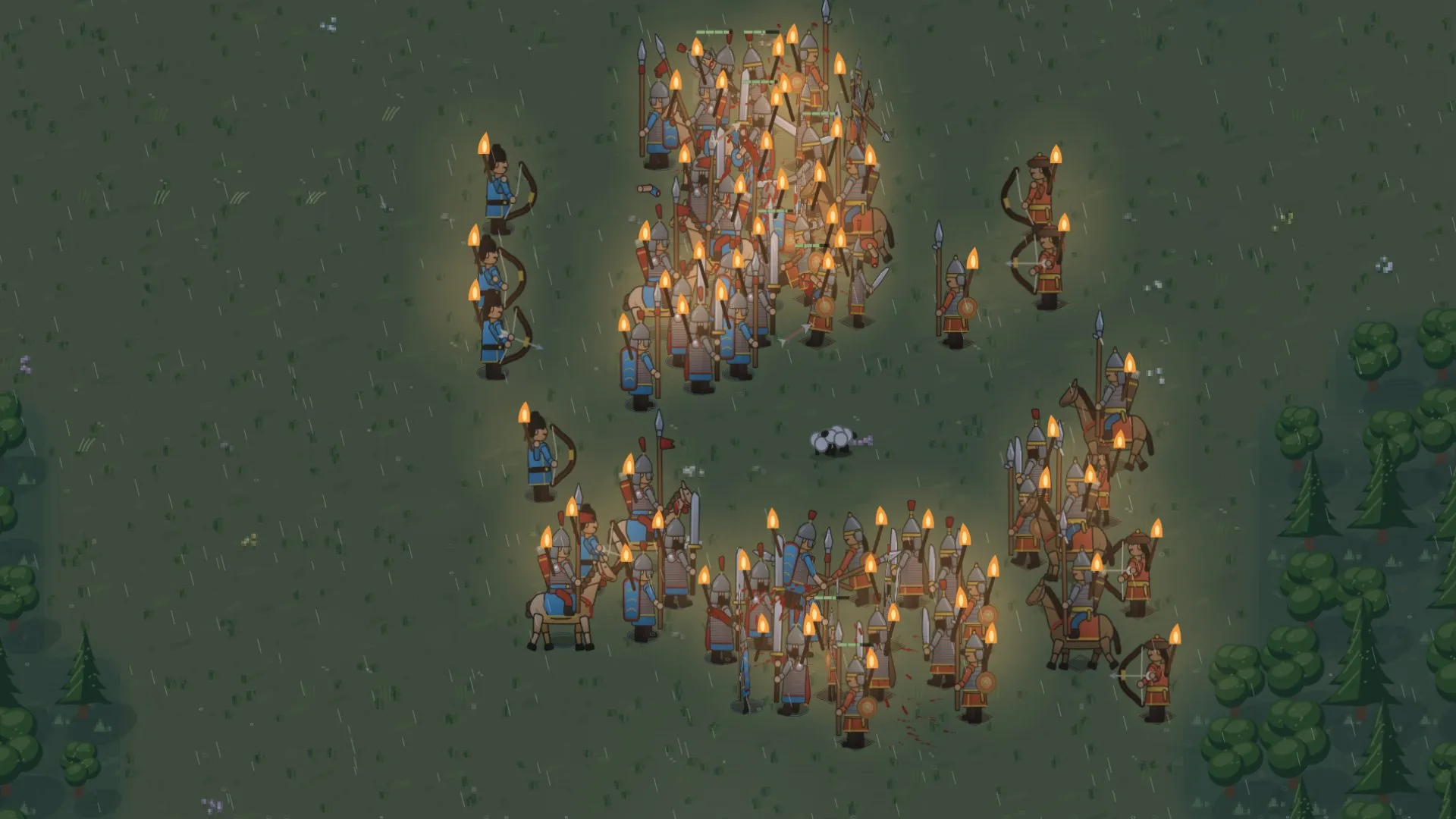
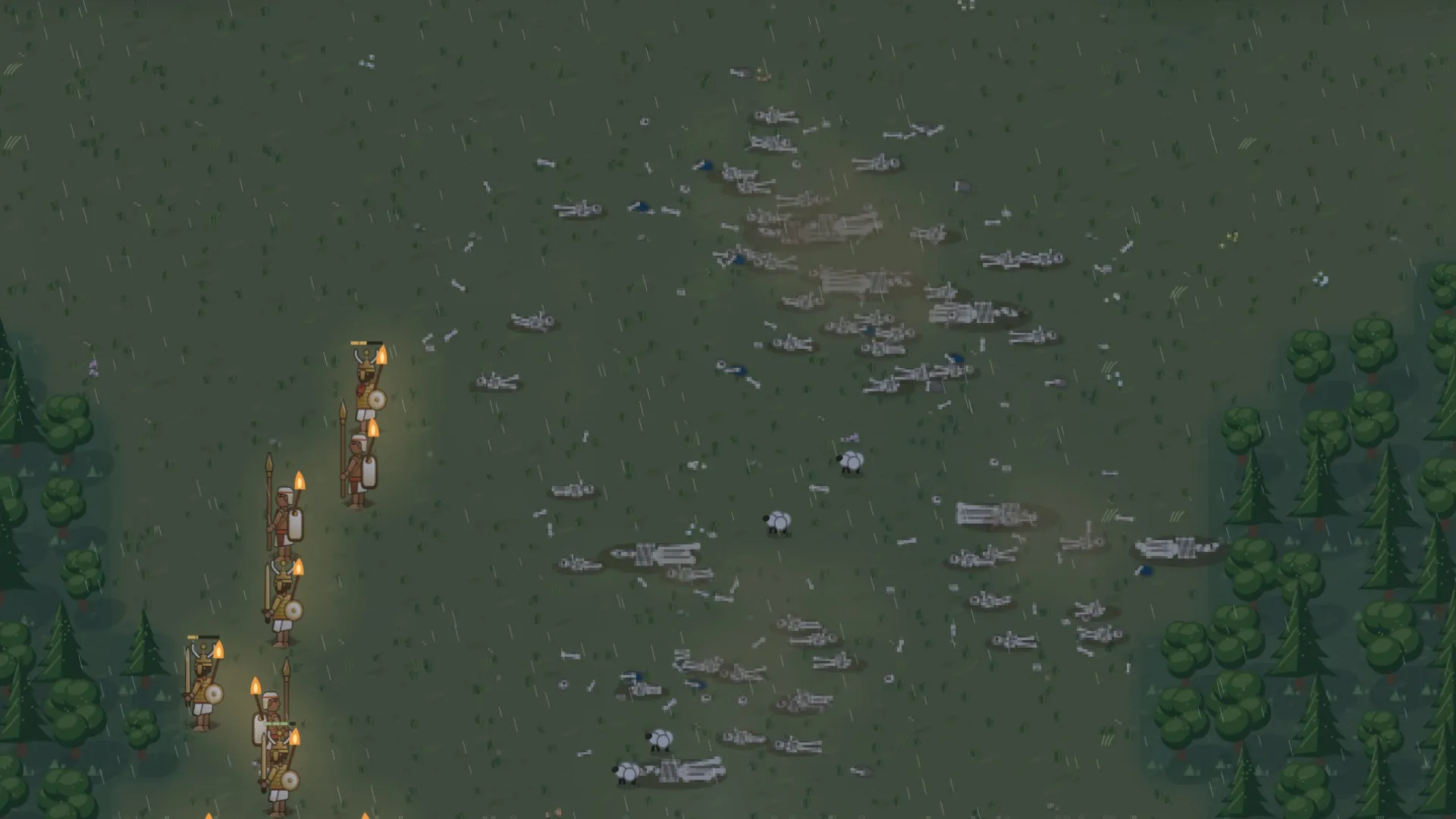
I redrew the villager, spearman, infantryman, archer and horseman of all 65 civilizations. Each wears that people’s own clothes and carries its own weapons. I did not recolour a template; each one is its own drawing. The Roman legionary has his scutum and helmet, the Macedonian hoplite his round aspis, the Assyrian archer his angular bow, the Tang soldier his lacquered armour. Horse tack changes from people to people as well.
Signature abilities
Each civilization’s signature unit is now not only strong but plays differently. All 65 have an ability of their own. A few examples:
- Phalanx of Ur: standing still, takes less melee damage for each infantryman beside it.
- Praetorian Guard: with two Praetorians close by it forms a testudo and takes far less damage from arrows.
- Spartan Hoplite: hits harder the more health it loses.
- Mamluk Horseman: shoots a bow at distant targets and lances those close.
- Janissary: after standing still it digs in, reloading faster and shooting further.
- Venetian Crossbowman: part of the price of every enemy it kills goes into Venice’s treasury as gold.
I tested each ability against mixed armies of equal cost; none of them wins a match on its own.
Buildings, walls and landmarks
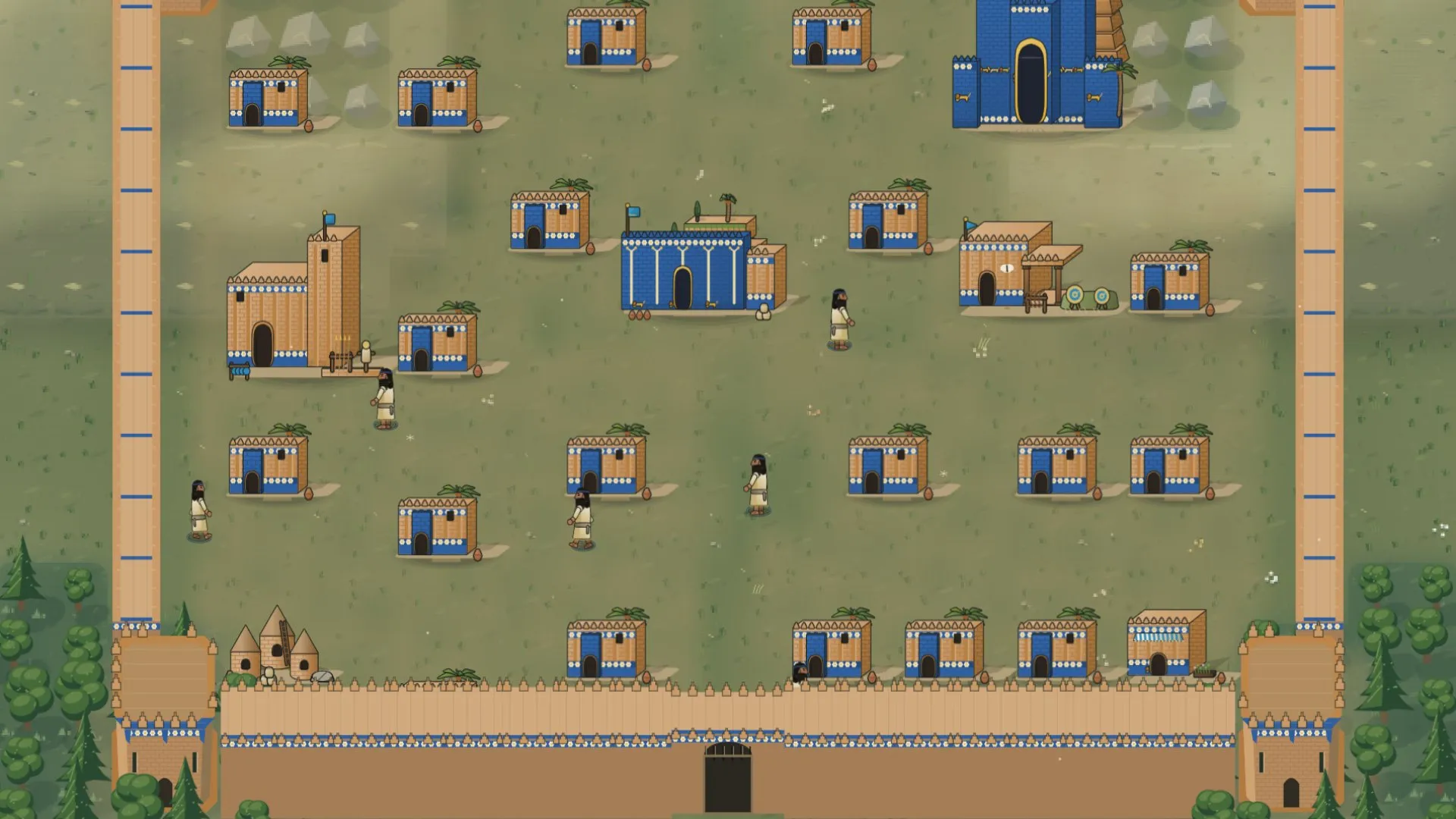
Houses, barracks, stables, towers, walls and gates are drawn in each civilization’s own architecture: mudbrick and glazed brick in Mesopotamia, whitewashed flat roofs on the Nile, arched stone in India, curved roofs and pagodas in East Asia, tiles and colonnades in the Aegean.
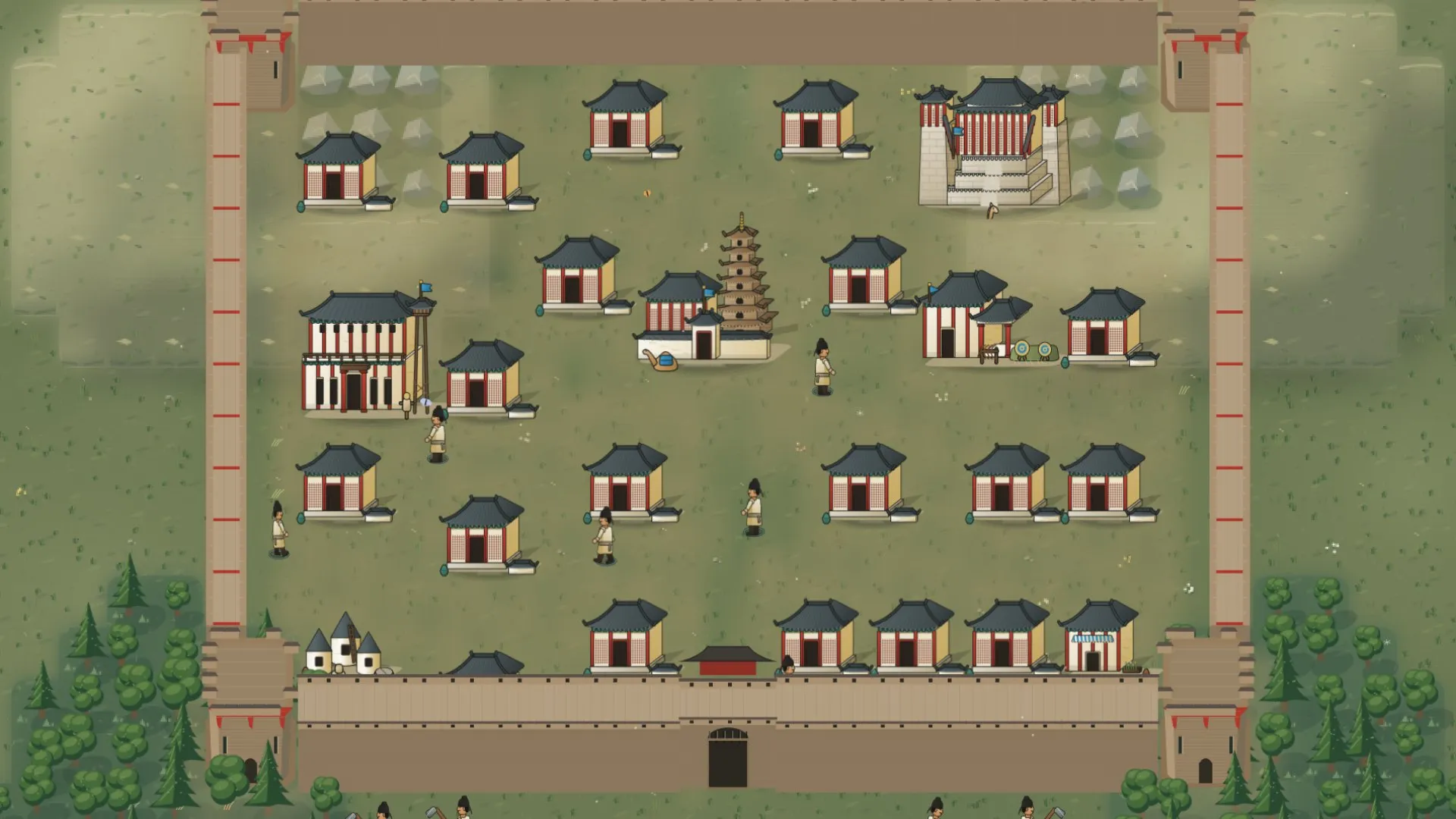
I remade the landmarks too. Each is the real masterpiece that the encyclopedia names for that people: the Ziggurat of Ur, the pyramids of Giza, the Pantheon, the Doge’s Palace, the Library of Alexandria. Where a civilization’s castle already showed that masterpiece, the castle became another building of the same people.
Reforms with historical names
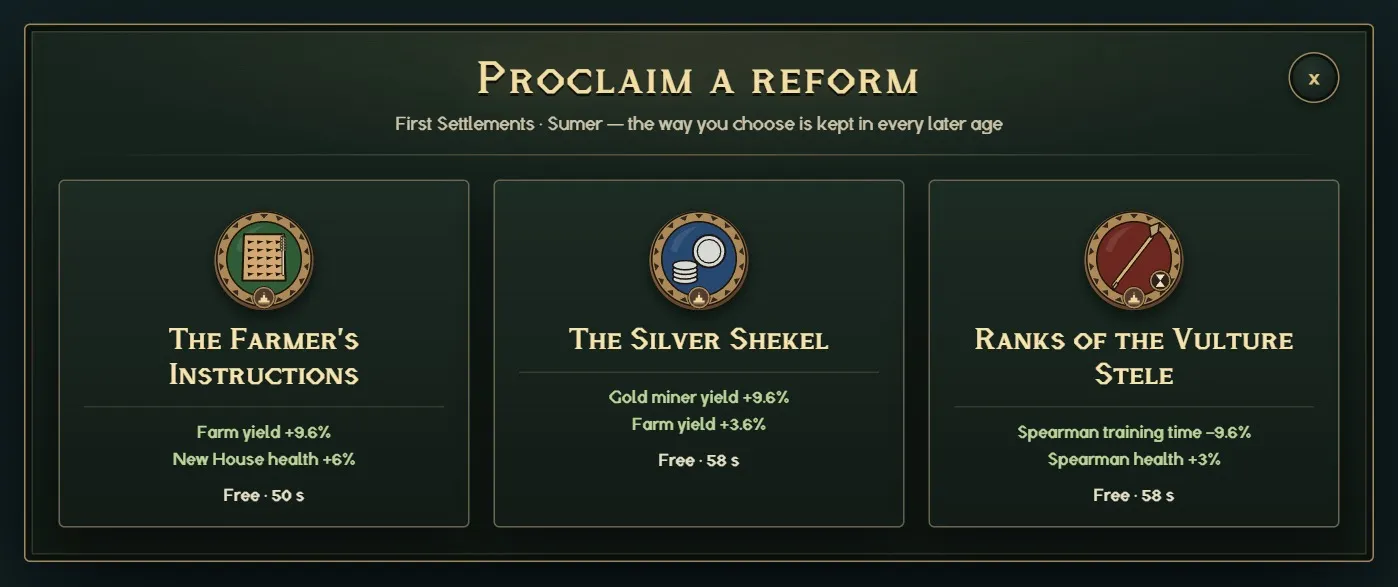
The reforms that arrived in v1.9 had names that read like a clerk’s ledger: “Tablet Accounting”, “Guard Cover”. Every one of the 195 now carries the name of a real institution, work or weapon of that people, chosen to fit its effect: the Farmer’s Instructions and the Silver Shekel of Sumer, the Qanats of Persia, the Agoge of Sparta, the Grand Canal of the Sui, the Muda convoys of Venice. Their effects and costs are unchanged.
I redrew their icons as well. Each reform is now a seal. The rim ornament names the region, the clasp at the bottom shows the civilization’s emblem, and the colour of the field shows the kind of gain. In the middle is the reform itself, drawn with that people’s own shield, bow or tower.
The heritage window
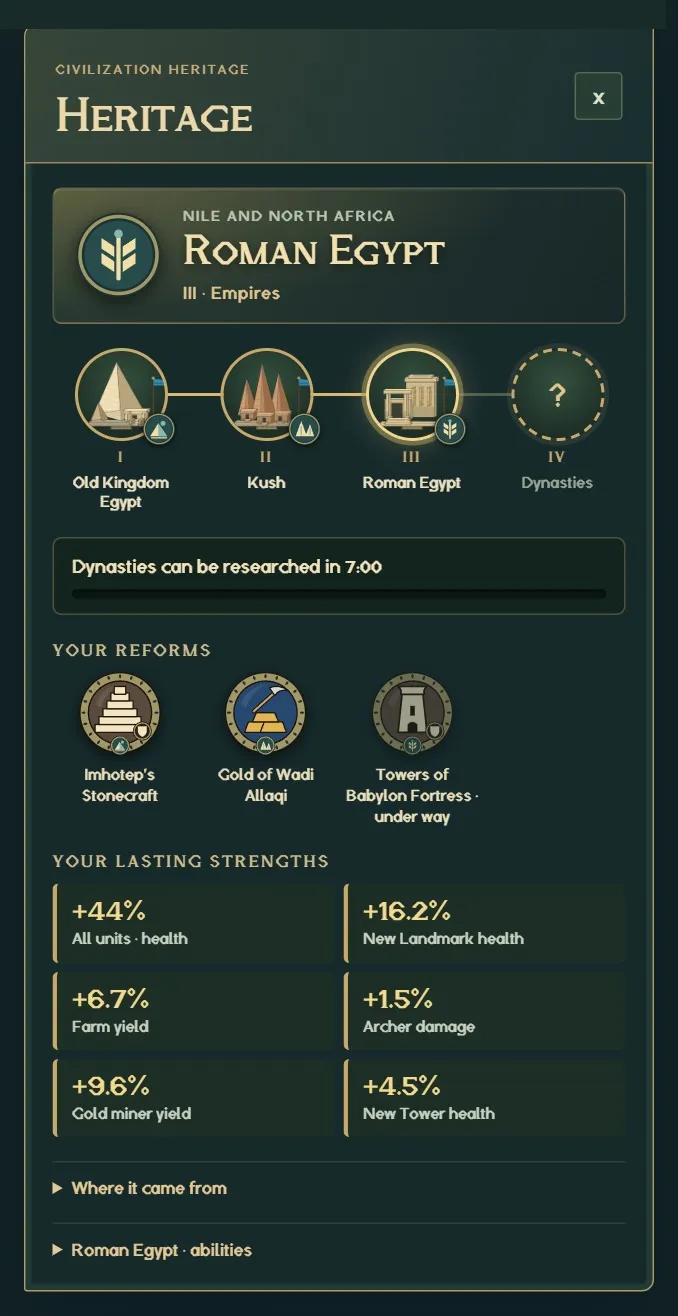
The heritage window was a long column of text: a card for every source, the same effects repeated on each. Now it opens on the civilization you rule. Below it is a road of four ages, with the landmark of the people you chose in each, and the next age glowing. A bar tells you the next step and how far along it is. Your reform seals sit in a row. Your lasting gains are added up as large figures, with the detailed breakdown folded away below.
Armies walk free
Every move order used to put the selection into a square block and hold everyone to the pace of the slowest soldier, which was slow and tedious. Now, unless you choose a formation, troops walk free: the group keeps its shape and each soldier walks at his own pace. Press a formation button to apply it; press the same button again to break ranks. Forming up in place is faster too: two dozen soldiers took 13 seconds to form a square, now they take 6.
Other fixes
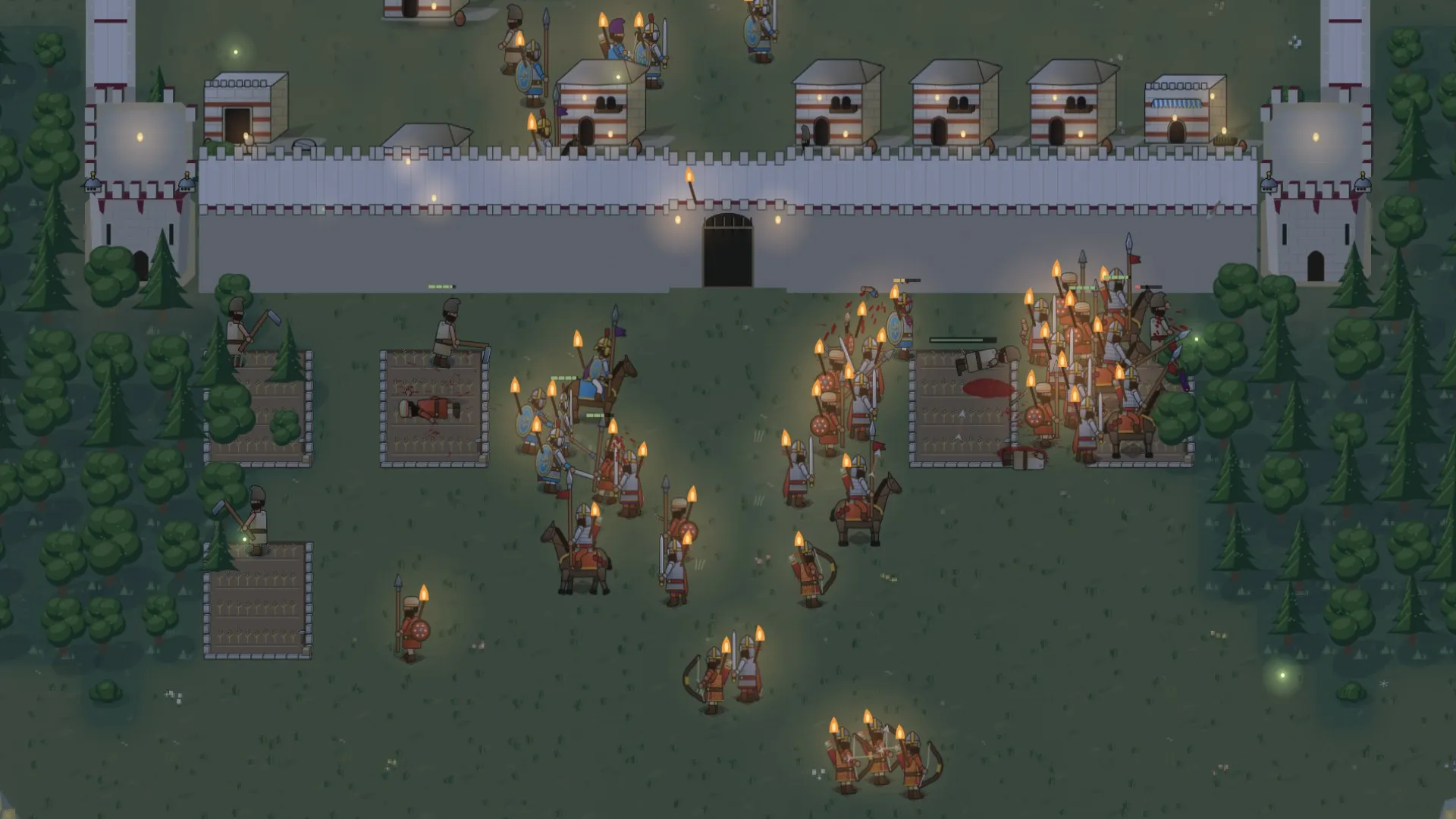
- When your villagers were raided, the alert was replaced by “your troops are fighting” as soon as soldiers ran to help. Now one fight gives one alert. It appears at the top centre of the screen, above the reform panels, and can be dismissed. In online matches it never appeared at all; that is fixed.
- The parade on the main menu stuttered. The new soldiers are so detailed that redrawing them every frame was too slow; now each pose is drawn once and stamped.
This version changes the online match version. If you kept the game tab open, reload it once before joining an online match.
The game is at cradlecrown.com. Send bugs or suggestions through r/cradlecrown or to [email protected].